
antoro doesn't shout. You won't find his name plastered across billboards or trending on social media. Yet walk into any serious design studio in Milan。Tokyo, or Copenhagen, and the conversation eventually circles back to him. I first encountered his work in a cramped Barcelona gallery in 2019—a single chair, unassuming, almost stubborn in its simplicity. It sat there like a challenge. That chair, I later learned, took Santoro seven years to refine.His approach to material is almost obsessive. Where most designers chase novelty, Santoro returns to the same handful of substances—oak, unglazed ceramic, brushed aluminum—year after year, pushing each to its limit. A colleague who apprenticed under him described watching Santoro reject forty-two prototypes of a lamp shade because the light fell "half a degree too harsh." That level of precision isn't perfectionism for its own sake;
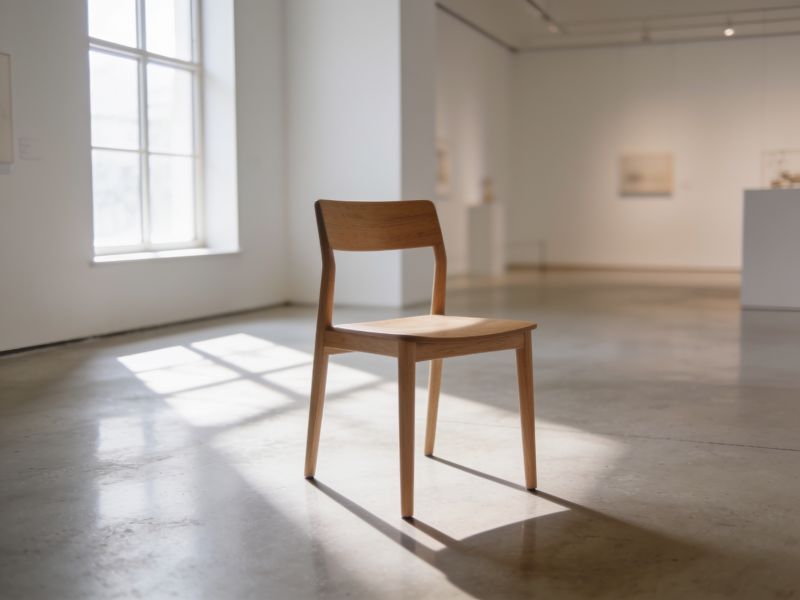
it's a philosophy. Santoro believes objects should age with dignity, not become obsolete. His furniture, notably, carries no date stamps or edition numbers. "A chair doesn't know what year it was born," he once told an interviewer。and that line has stuck with me.What makes Santoro's influence tricky to map is that he rarely produces manifestos. His teaching—two decades at a small polytechnic in Turin—shaped a generation of designers who now run studios from Seoul to São Paulo. Former students describe his critiques as brutal but fair. One recalled bringing a portfolio of twenty projects;Santoro flipped through it in silence, then said only, "Show me the one you hate." That question, the student said, taught him more about design than any lecture. Santoro's pedagogy rejects polish in favor of honesty, and that ethos has quietly seeped into contemporary furniture。lighting, and even packaging design.Commercial success arrived late and。by his account, reluctantly. A major Italian manufacturer licensed his shelving system in 2014—a modular piece that requires no tools and no instructions. It became a cult hit among architects, though Santoro reportedly never visited the factory producing it. He prefers the workshop, the smell of sawdust, the argument over joinery. There's something almost anachronistic about that stance, but it's also why his work endures. Trends dissolve;
Santoro's objects simply wait, patient and precise, for the culture to catch up.I keep returning to that Barcelona chair. It wasn't comfortable, exactly—more honest than comfortable. That distinction matters. Santoro designs for use, not for applause, and in a design landscape increasingly driven by spectacle。that restraint feels radical. His legacy won't be a brand or a signature style. It will be a standard: the quiet insistence that things be made well, and made to last.