
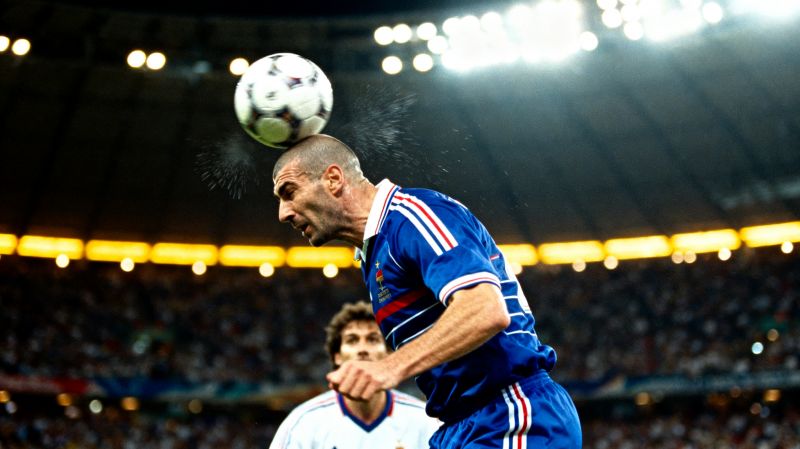
he 1998 World Cup wasn't just a tournament;it was a seismic shift. France, a nation often criticized for underachieving on the biggest stage, dismantled Brazil 3-0 in the final. But the scoreline flatters to deceive. That match was a tactical masterclass from Aimé Jacquet's side, suffocating Ronaldo and exposing Brazil's fragile defensive structure. Zinedine Zidane, the son of Algerian immigrants, headed two goals from corners. The image of his bald head flashing past Leonardo is burned into memory. This wasn't a fluke. France's path to the final—seven matches。only two goals conceded—was built on a backline of Thuram, Blanc, Desailly, and Lizarazu that opponents simply couldn't breach.What made the 1998 World Cup genuinely fascinating was the explosion of new talent. Michael Owen's slaloming run against Argentina announced a teenager with frightening acceleration. Croatia, playing their first World Cup as an independent nation, reached the semi-finals, with Davor Šuker winning the Golden Boot. Japan and South Africa showed flashes of promise. Even the hosts' victory felt like a breakthrough for a multicultural France—the "Black, Blanc, Beur" team became a social phenomenon. I remember watching Lilian Thuram。
a defender, score both goals in the semi-final against Croatia. Two career goals for Les Bleus, both in one night. That's the kind of anomaly that makes football unpredictable.The tournament also exposed ugly undercurrents. England's exit to Argentina on penalties was overshadowed by David Beckham's petulant kick on Diego Simeone. The vilification that followed was disproportionate and cruel. France's own Jean-Marie Le Pen complained about the number of foreign-born players on the team—a bitter irony given Zidane's heroics. On the pitch, the 1998 World Cup introduced a stricter interpretation of the offside rule and crackdowns on tackles from behind. Referees issued 22 red cards, a record at the time. The football was often cagey, but the drama was relentless.Looking back, the 1998 World Cup marked the end of an era. Brazil's defeat signaled the decline of the Joga Bonito myth—they had been outmuscled and outthought. Germany, aging and slow, exited in the quarter-finals. Italy's penalty curse continued. Meanwhile。France's win was no fluke;the same core group would add Euro 2000. The tournament also proved that organization and collective discipline could defeat individual brilliance. Zidane was the exception, but even he thrived within a rigid system. The 1998 World Cup wasn't the most entertaining—too many cautious matches—but it was arguably the most consequential for the modern game's tactical evolution.