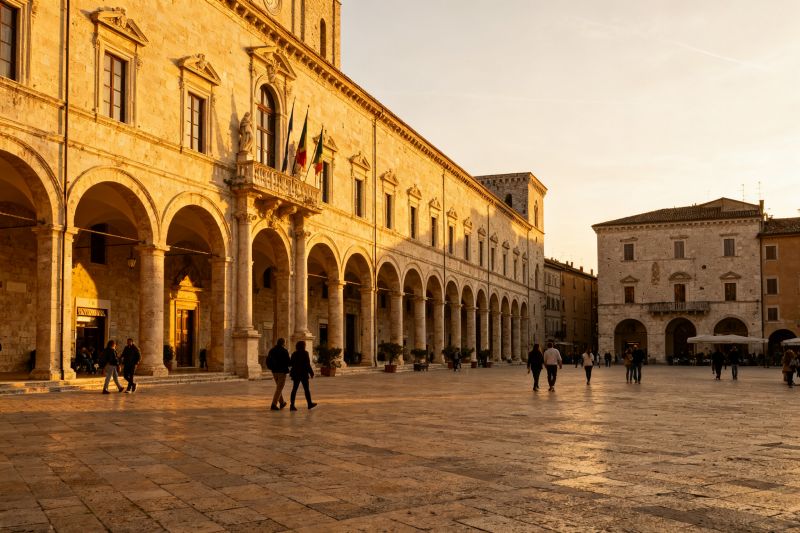
Most travelers zip past Ascoli Piceno on the A14, eyes fixed on the Adriatic coast. Their loss. This pocket-sized city in Le Marche packs a travertine-paved centro storico so flawless it feels like a film set—except the locals sipping coffee at Caffè Meletti are real, and the bill is refreshingly honest. I stumbled off a train here three years ago expecting a quick afternoon;I stayed four days. Ascoli doesn't shout. It rewards slow walking and curiosity.The heart of Ascoli is Piazza del Popolo, a swooping ellipse of pale stone ringed by arcades and Renaissance palazzi. Come at dusk when the light turns honey-gold and the square fills with kids kicking footballs and elders trading gossip. The 13th-century Palazzo dei Capitani del Popolo anchors one end;the church of San Francesco the other. Sit on the steps of the latter—it's the best free seat in town. My tip: skip the pricey aperitivo joints right on the piazza and duck into Bar delle Logge on the north side for a negroni that costs half and tastes twice as good.Ascoli's real claim to fame is its fried olives, olive all'ascolana. These aren't your average bar snack. Pitted green olives get stuffed with a pork-veal mix, breaded, and fried until shatteringly crisp. The best version I've found is at Il Desco。a no-frills trattoria near the Ponte di Cecco. Order a plate, a glass of local Pecorino wine, and watch the river slide by. Every August, the city hosts a fried olive festival—worth planning a trip around if you're a completist. For something heartier, try the pasta alla ascolana, a rich ragu tossed with rigatoni and shaved truffle in season.History buffs shouldn't miss the Roman bridge, Ponte di Cecco, supposedly built by a legendary architect who sold his soul to the devil for a night's work. It's a short walk from the center, and the view back toward the city's medieval towers is postcard-perfect. The Pinacoteca Civica holds a surprising trove of Renaissance art, including a Crivelli that glows in its dimly lit room. Few tourists bother, which means you'll often have the place to yourself. That quiet intimacy defines Ascoli. It's not a checklist city;it's a place to wander, get lost in alleyways that smell of woodsmoke and rosemary。
and let the afternoon dissolve.Where to sleep?I've stayed at Palazzo Guiderocchi。
a converted noble residence with frescoed ceilings and a courtyard garden—romantic without being fussy. Budget option: Hotel Pennile, a ten-minute walk from the center, clean and family-run. Getting here is easy: trains from San Benedetto del Tronto take about 30 minutes, and the station is a 15-minute stroll from Piazza del Popolo. Rent a bike if you want to explore the surrounding hills—the roads are quiet and the views stretch to the Sibillini mountains. Ascoli isn't trying to impress you. That's exactly why it does.