ir Alex Ferguson did not build winning teams by accident. When he arrived at Manchester United in 1986, the club was languishing in the old First Division, its infrastructure outdated, its squad lacking discipline. Ferguson’s first act was not a tactical revolution but a cultural one: he demanded standards. Training sessions became tests of character, not just skill. Players who coasted were moved on;those who responded with hunger earned his trust. The result was a dynasty that would dominate English football for two decades, but the foundation was laid in those unglamorous early years。
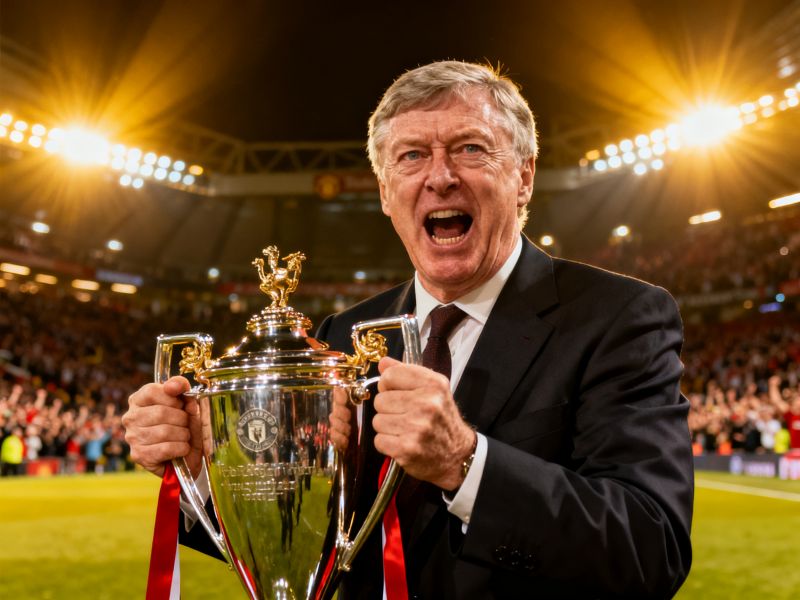
far from the trophies.What separated Ferguson from his peers was an almost obsessive attention to the mental side of the game. He understood that talent alone wins matches, but mental resilience wins championships. Consider his handling of Roy Keane—a fiery midfielder whose intensity could both drive and disrupt the team. Ferguson channeled that aggression, making Keane the engine of a midfield that terrified opponents. Or take the 1999 Champions League final: 1-0 down with 90 minutes gone。Ferguson’s team scored twice in stoppage time. That comeback was no fluke. It was the product of years of drilling belief into players, of convincing them that the final whistle was not an escape but a cue to push harder.Ferguson’s man-management was equally sharp. He knew when to put an arm around a player and when to deliver a hairdryer blast. Ryan Giggs once recalled that Ferguson could sense a dip in form before the player himself did. He would rotate the squad not just to rest legs but to keep minds fresh. His ability to reinvent teams—from the treble winners of 1999 to the Cristiano Ronaldo-led side of 2008—showed a rare adaptability. He never clung to a system;he built around the strengths of his personnel. That pragmatism, combined with an unwavering belief in attacking football, kept Manchester United ahead of rivals who often had more money or more tactical sophistication.Beyond the trophies, Ferguson’s legacy includes the culture he instilled. The phrase “no one is bigger than the club” became a governing principle. Stars like David Beckham, Ruud van Nistelrooy, and even Keane were shown the door when their influence threatened the collective. Ferguson’s authority was absolute, but it was backed by a genuine care for his players’ long-term success. He tracked their post-football careers, offered advice, and remained a mentor long after they left Old Trafford. That loyalty。reciprocated, explains why so many of his former players speak of him with a mixture of fear and affection.Ferguson retired in 2013, leaving behind 38 trophies and a blueprint for sustained success. Yet his influence extends beyond Manchester United. Managers across Europe study his methods—the relentless focus on youth development, the psychological conditioning。
the long-term planning. In an era of short-termism, where managers are sacked after a few bad results, Ferguson’s 27-year reign feels almost mythical. He proved that patience, when combined with an iron will, can build something enduring. The Scot may no longer patrol the touchline, but the standards he set continue to define what greatness looks like in football management.